
In British Columbia, every acre, every animal, and every piece of equipment works hard. Let’s make sure your buildings do the same.
From the rainy Fraser Valley to the snowy Cariboo and the hot, dry pockets of the Interior, fabric buildings on BC farms are becoming a strategic way to protect livestock, feed, and machinery without locking yourself into rigid, expensive infrastructure. SpanMaster’s steel-frame, fabric-covered structures are engineered for BC conditions, helping farmers reduce risk, improve animal welfare, and keep operations running smoothly all year.
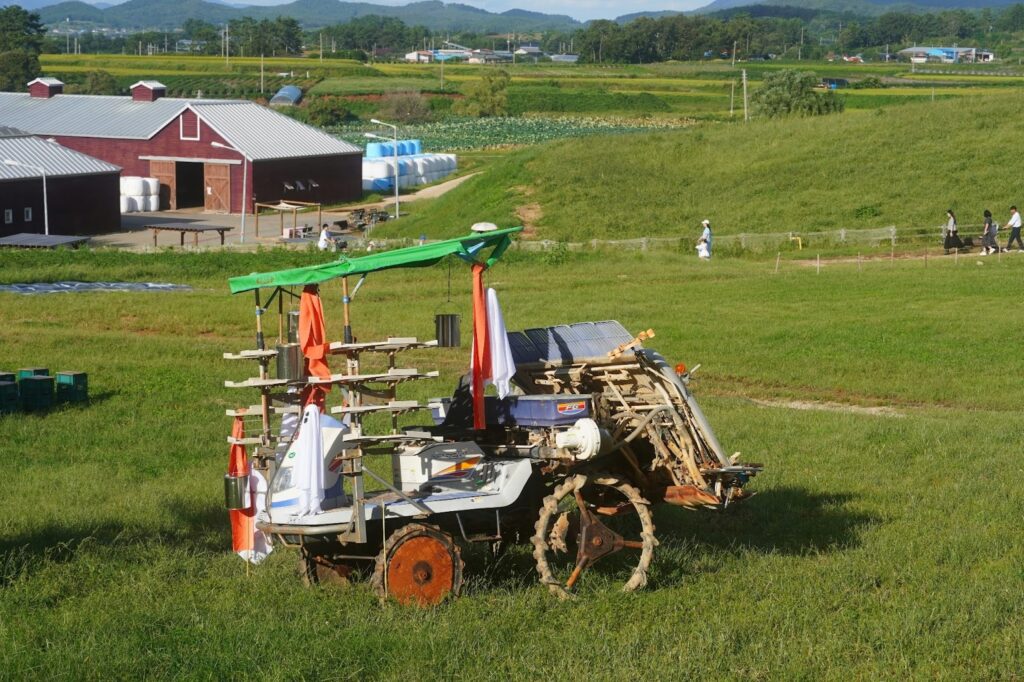
This article looks at how fabric buildings for BC farmers protect animals and equipment in real-world conditions, how they compare with traditional barns, and what to consider when designing your next farm building.
Why Shelter Strategy Matters More Than Ever for BC Farmers
Choosing a barn or storage building is no longer just a “construction project.” It is a risk-management and productivity decision.
The modern BC farm building influences:
- Animal Health and Welfare: Air quality, temperature, light exposure, and space.
- Equipment Life and Uptime: How well machinery is protected from moisture, UV, and corrosion.
- Feed Quality and Loss: Especially hay, silage, and grain.
- Staff Safety and Efficiency: Clear traffic routes, good visibility, and secure footing.
- Insurance and Resilience: How well your infrastructure holds up to extreme events.
BC agriculture is already under pressure. The 2021 Census of Agriculture recorded 15,841 farms in BC, and many operators are running more complex, higher-value operations on less land. At the same time, farmland values in the province are among the highest in Canada, and while they dipped by 3.1% in 2023, that small decline came after several years of strong growth. The message is clear: every investment in the yard must work harder and last longer.
Labour adds another layer of complexity. Across Canadian agriculture, peak vacancy rates reached 7.4% in 2022, contributing to billions of dollars in lost sales. BC farms feel this shortage acutely in busy seasons. Buildings that are faster to assemble, easier to maintain, and simpler to manage day-to-day free up precious labour for actual production.
Pre-fabricated, modular structures are one of the ways the industry is responding. We can say that pre-fabricated buildings are the future of construction, as pre-engineered components reduce on-site labour, control quality, and limit weather delays; key advantages for time-pressed farm operators.
In this context, fabric buildings for BC farmers are not just “alternative barns.” They are a strategic tool to stay resilient in a climate- and cost-constrained environment.
What Makes Fabric Buildings Different from Traditional Barns and Sheds?
Our fabric building is an engineered system built around a post-production, hot-dip galvanized steel frame and a high-tension fabric membrane, designed site-specific for your snow and wind loads, corrosion resistance, and decades of use.
Key structural differences versus conventional wood or steel barns include:
- Clear-Span Interiors: No internal columns over large spans, which means more flexible layouts for pens, drive alleys, feeding lanes, and equipment storage.
- Natural, Diffuse Daylight: The white or translucent membrane admits even, low-glare daylight, reducing electricity use and improving visibility and animal comfort.
- Lightweight But Strong Envelope: Fabric does not rot like wood or rust like bare metal, and the frame is hot-dip galvanized to resist corrosion.
- Flexible Foundations: Depending on site conditions, fabric buildings can be anchored on concrete, grade beams, blocks, or engineered piers, reducing groundwork cost and complexity.
For fabric buildings on BC farms, clear-span space is a major advantage. Many BC operations juggle dairy or beef herds, stored hay, and machinery on tight, high-value land parcels inside or near the Agricultural Land Reserve (ALR). Being able to re-line pens, add a drive-through lane, or convert part of the barn to machinery storage without structural changes is a real asset.
SpanMaster’s arch shape buildings are a classic example: their curved profiles, up to 80’ wide create a wide, unobstructed footprint that works equally well as a free-stall barn, commodity shed, or mixed livestock and equipment building. Peak shaped designs meet these needs for widths up to 160’ wide.
In short, the structural DNA of fabric buildings aligns with the flexibility, multi-use demands, and future-expansion needs of today’s BC farms.
Weather Protection Across BC’s Climate Zones
Few regions pack as much climate diversity into one province as British Columbia. From coastal rain and salt air to interior snow and cold, and the now-familiar heat waves and wildfire smoke, protection from the elements is no longer optional.
The 2021 “heat dome” over Western North America, which hit BC especially hard, was the deadliest weather event in Canadian history, with the BC Coroners Service attributing over 600 human deaths to heat exposure in a single week. That same event and subsequent wildfire seasons also damaged crops, stressed livestock, and tested infrastructure across the province.
Modern fabric buildings for BC farmers are engineered with this volatility in mind:
- Snow and Wind Loads: Structural steel trusses and properly tensioned membranes are designed for local snow and wind requirements, especially in higher-elevation or northern regions.
- Rain and Moisture Management: Fabric roofs and well-detailed eaves shed water quickly, while appropriate grading and drainage keep foundations dry, critical on the South Coast and in the Fraser Valley.
- UV and Corrosion Resistance: High-quality membranes and galvanized steel resist UV degradation and rust, protecting both the structure and the animals or equipment inside.
So, weather-resistant agricultural buildings protect your investment: weather-resilient design, materials that do not rot or rust, tight weatherproofing, and strong structural systems directly reduce long-term risk for barns and storage buildings.
For heavier-snow regions, peak shape buildings can be particularly effective, with geometry that sheds snow more aggressively and offers additional overhead height for vertical storage or tall equipment. That combination of snow performance and usable height is highly relevant for hay, bedding, and mixed livestock/equipment applications in the Interior and North.
For BC producers, the takeaway is straightforward: a properly engineered farm building in fabric and steel can be weather-ready across the province’s diverse microclimates, not just in “mild” regions.
For ongoing, hands-on preparation, take a look at our seasonal tips for maintaining farm buildings. It’s a practical guide on how to inspect, clean, and prepare your structures ahead of winter storms, heavy rains, or extreme heat, so your weather-ready design continues to perform at its best throughout the year.
Healthier Herds: Airflow, Daylight, and Animal Welfare
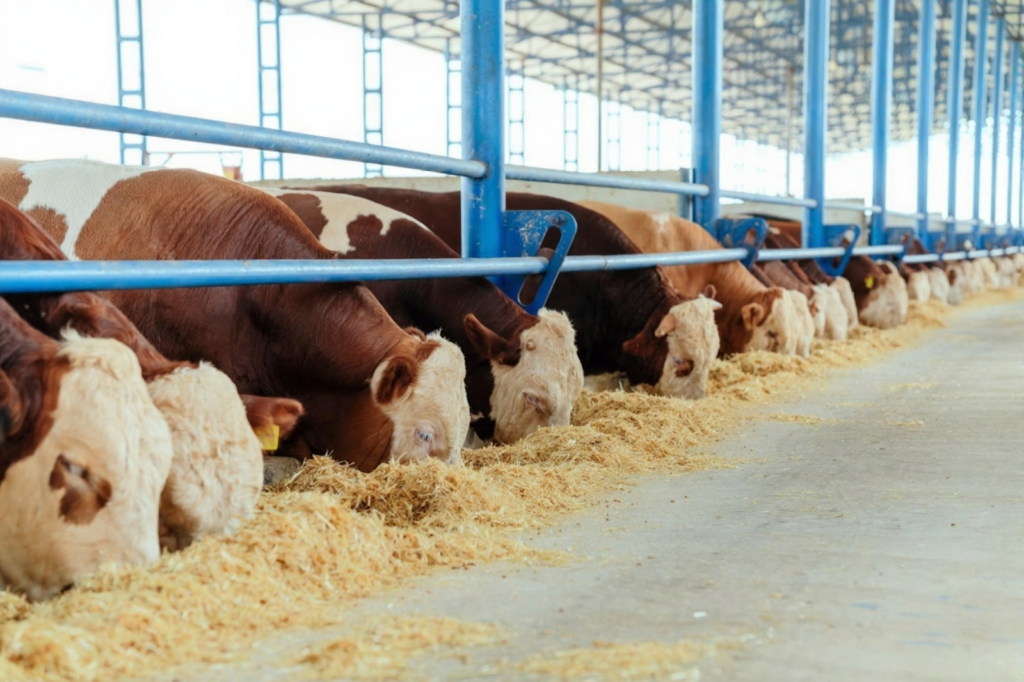
Animal comfort is directly tied to performance metrics: milk yield, weight gain, fertility, and veterinary costs. Fabric structures bring several welfare advantages that traditional barns struggle to match without expensive mechanical systems:
- Superior Natural Airflow: Curved profiles, ridge and gable vents, and sidewall openings can be configured to create continuous, low-draft air movement through the animal space. This helps remove moisture, ammonia, and odours.
- Cooler, More Even Temperatures: The light-coloured membrane reflects solar gain while still admitting daylight. Combined with an appropriate opening design, this keeps barns cooler during hot spells and reduces heat stress.
- Brighter, Low-Glare Interiors: Diffuse daylight improves visibility, makes animals easier to monitor, and creates a calmer environment than narrow beams of harsh artificial light.
These benefits matter even more in a province experiencing more frequent extreme heat and air quality events. During heat waves and smoky periods, having a farm building that already leverages natural ventilation and diffuse light gives you more options for protecting livestock. Supplementary fans and misters work better in a barn that is already moving and refreshing air.
Ultimately, fabric buildings improve airflow and animal health on farms: ridge vents, gable-mounted vents and exhaust fans, open sidewalls, and high, clear-span ceilings help reduce respiratory issues and stress while keeping humidity in check.
Importantly, many of these advantages are built in at the installation stage. Orientation, vent placement, end-wall design, and sidewall details all influence airflow. Our step-by-step guide on how to install fabric buildings walks through this process and demonstrates why proper planning on day one pays off for animal comfort and building performance over time.
For dairy, beef, poultry, and equine operations looking to modernize, fabric buildings in BC farms offer a practical way to lift animal welfare while controlling capital and operating costs.
Protecting Equipment, Feed, and Inputs from Loss and Downtime
Livestock are only one part of the picture. The modern BC farm may have hundreds of thousands, or even millions, of dollars tied up in tractors, harvesters, feed mixers, irrigation systems, and specialized implements. Leaving that equipment in the open, or in undersized makeshift sheds, is a direct hit to your balance sheet.

Industry data from fabric-building providers across North America shows that commodity storage and equipment barns are among the fastest-growing applications for tension-fabric structures, precisely because they offer:
- Dry, well-ventilated space that reduces rust, corrosion, and electrical issues.
- Wide, column-free bays are so large that implements can be parked, serviced, and moved without structural obstacles.
- Flexible layouts that can be updated as the equipment lineup changes.
For feed and crop inputs, fabric buildings in BC farms are increasingly used for:
- Hay and straw storage, especially where stacked bales need airflow but must stay dry.
- Bulk grain or silage bays, with high sidewalls and flexible loading/unloading paths.
- Fertilizer, salt, and soil amendment storage, where corrosion-resistant structures are essential.
You can maximize farm efficiency with custom-designed fabric structures, as layout, door placement, and building size directly influence yard logistics, reducing wasted travel, bottlenecks, and time lost moving equipment in and out.
For BC producers who are already dealing with high land and input costs, using a versatile BC farm building to bring both equipment and feed under one roof can be one of the simplest ways to protect capital and reduce unplanned downtime.
Designing the Right Fabric Barn for Your BC Operation
No two BC farms are the same. A Fraser Valley dairy, an Okanagan mixed farm, and a Peace Country hay operation have very different needs. The advantage of SpanMaster’s approach is that the same core system, steel frame plus tension fabric, can be configured to suit all three.
Key design decisions include:
- Building Profile:
- Arch-shaped buildings maximize clear-span space and are particularly efficient for livestock barns and commodity sheds where airflow and open interior volume are priorities.
- Peak profiles (where used) can increase sidewall height and provide more traditional “barn-like” geometry while still leveraging fabric advantages.
- Span, Length, and Height:
- Width and peak height need to align with animal flow, bedding type, equipment clearance, and storage height (for stacked bales or bulk piles).
- Foundation and Site Conditions:
- Soil type, drainage, snowfall, and wind exposure all influence foundation choice and building orientation.
- Intended Use Mix:
- Will the building be dedicated to livestock housing, pure equipment storage, or a flexible multi-use space that evolves over time?
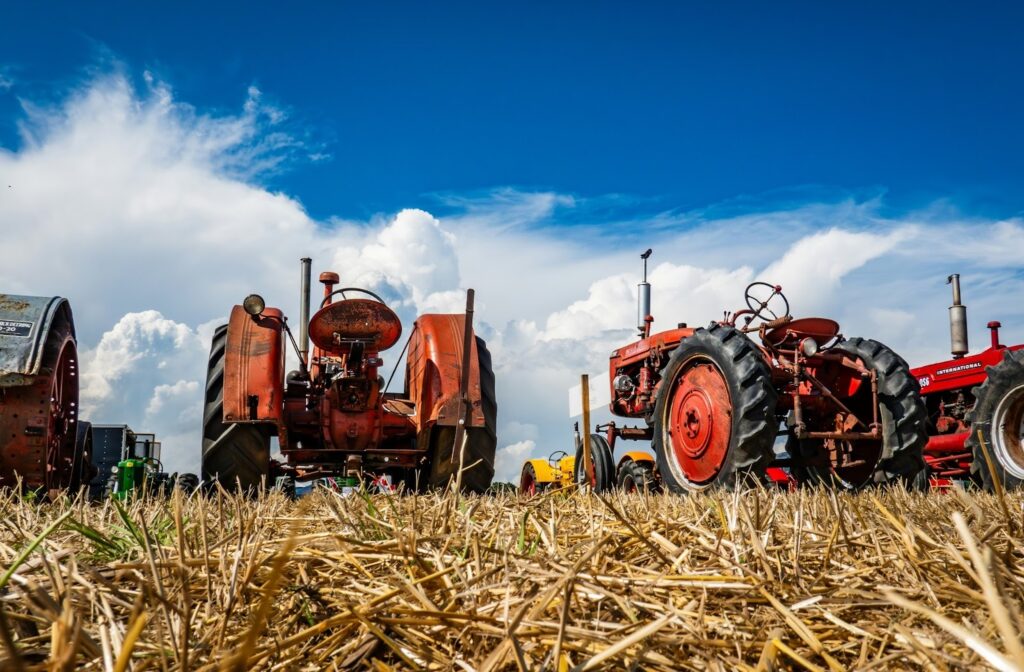
We are sure that fabric barns are the future of sustainable farming because daylighting, natural ventilation, and weather resilience help cut energy use and maintenance while supporting animal and staff comfort. Those benefits become more valuable as energy prices rise and sustainability expectations increase across Canada.
Looking ahead at the future of fabric buildings, advances in steel and fabric technology are increasing customization and performance across industrial, commercial, and agricultural sectors. For BC producers, that means a BC farm building you put up today is not a technological dead end: future re-covers, expansions, or reconfigurations can build on the same structural backbone.
Lifespan, Maintenance, and ROI: Getting More Years Out of Your Barn
One of the most common questions about fabric buildings for BC farmers is lifespan. How long does the membrane really last? What about the frame?
Experience and industry data show that:
- The galvanized steel frame is a long-life asset when properly designed for local loads and maintained; it can outlast multiple fabric covers.
- High-quality membranes come with long warranties and can deliver decades of service when correctly tensioned and inspected.
- When the time comes, re-covering is usually far simpler and less disruptive than rebuilding or re-roofing an entire conventional barn.
Financially, this opens up an interesting return-on-investment (ROI) profile. Instead of putting all your capital into a traditional structure with a long, inflexible life, you invest in a high-quality frame and plan for membrane replacement once every 20-30 years, as part of your long-term maintenance strategy.
Extending your barn’s lifespan is possible now: regular inspections, proper fabric tension, timely repairs, and planned re-covers can stretch the performance of each structure over many additional years, often at a fraction of the cost of a full rebuild.
At the province level, this matters because BC farmland values remain high, and the 3.1% decline recorded in 2023 made it the only province to see a drop that year, even though values are still the highest on average in Canada. Smart, flexible infrastructure that can be renewed instead of fully replaced is one way to manage that economic reality.
In simple terms, a well-maintained fabric BC farm building can deliver more usable years per dollar than many farmers expect, especially when you factor in lower ongoing maintenance (no rot, less rust, fewer roofing repairs) and the ability to reconfigure interior layouts without expensive structural changes.
Real-World Scenarios: How BC Farmers Use Fabric Buildings Day-to-Day
To see how this all comes together, imagine a few common BC scenarios.
1. Fraser Valley Dairy: Cow Comfort & Feed Security
A dairy producer in the Fraser Valley installs a clear-span fabric barn for free-stall housing and feed storage. The high, arched roof and open sidewalls create continuous airflow, reducing humidity and ammonia. Diffuse daylight improves visibility in alleys and parlour approaches, while the attached commodity bay keeps total mixed ration (TMR) ingredients dry and accessible. When extreme heat or smoke returns, fans and sprinklers work more effectively because the barn already moves air well.
2. Okanagan Mixed Farm: One Roof, Many Uses
A mixed fruit and forage farm near Kelowna uses a fabric structure as a multi-purpose BC farm building: one end is set up as equipment storage, the other as hay and straw storage. During winter, a portion is temporarily panelled off for small livestock. As the farm’s needs change, internal fencing and storage layouts are rearranged without major structural work.
3. Northern/Interior Hay Operation: Snow, Wind, and Mobility
In the Cariboo or Peace region, a hay producer invests in a tall fabric commodity shed designed for heavy snow loads and strong winds. The clear-span interior allows flexible stacking and easy loader access, and the peaked profile helps snow shed off the roof. When market conditions shift, the same structure can be repurposed for equipment storage or cattle backgrounding with relatively minor interior changes.
Across these scenarios, fabric buildings in BC farms provide a common set of advantages: fast installation, flexible use, weather resilience, and strong protection for both livestock and equipment.
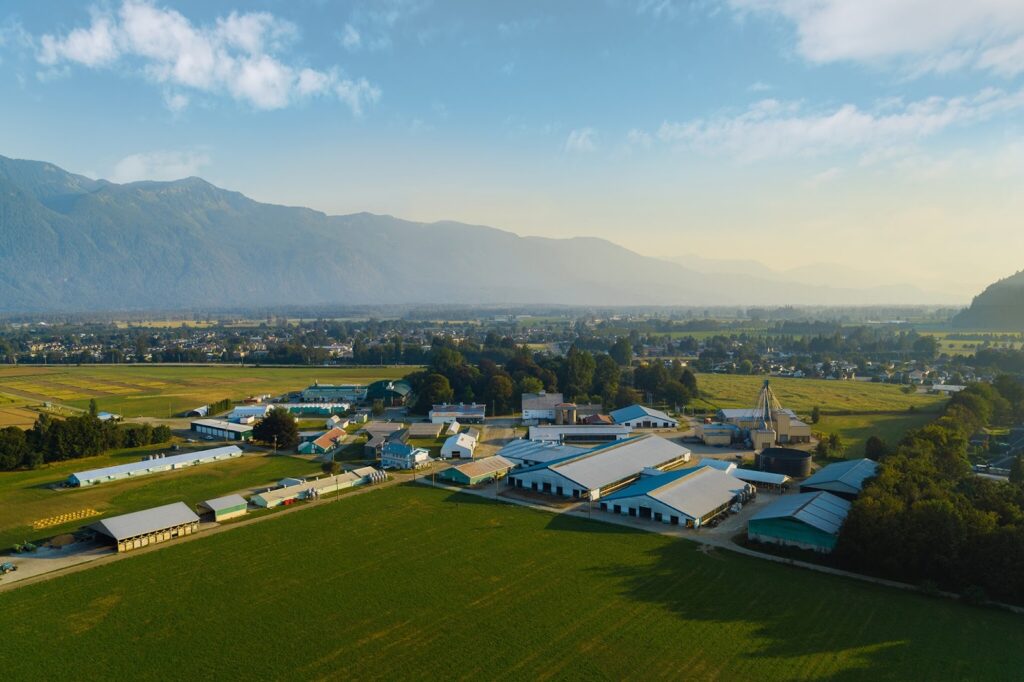
How to Get Started with a Fabric Building for Your BC Farm
If you are considering a fabric building in BC farms for livestock, feed, or machinery, the process usually starts with a straightforward conversation:
- Site and Needs Assessment: We review your location, climate zone, snow/wind loads, and municipal requirements, as well as your livestock, equipment, and storage needs.
- Concept Design and Budgeting: Building profile (arch or peak), span, height, and length are matched to your operational goals and budget. Options for doors, vents, sidewalls, and interior layouts are presented.
- Engineering and Permitting: Structures are engineered to meet local codes and farm-specific conditions, which is especially important in higher-risk weather areas and within the ALR.
- Installation Planning: Timing is aligned with your production calendar to avoid critical windows like harvest or calving. Foundations and building assembly are sequenced to minimize disruption.
- Maintenance and Long-Term Support: We provide guidance on inspections, adjustments, and future re-covers, so your BC farm building continues to perform for decades.
BC agriculture is operating in a new reality: climate volatility, high land and input costs, and ongoing labour constraints. In that environment, fabric buildings for BC farmers offer a rare combination of resilience, flexibility, and value, protecting livestock, equipment, and feed while giving you room to adapt.
Whether you are modernizing an existing yard or planning a new site from scratch, the right BC farm building can become one of the most reliable and versatile tools on your farm.
Your next practical step is to explore our building solutions for agriculture and then request a tailored quote based on your operation, herd size, and land base.
Some of our previous Pre-Engineered Fabric Structure projects: